
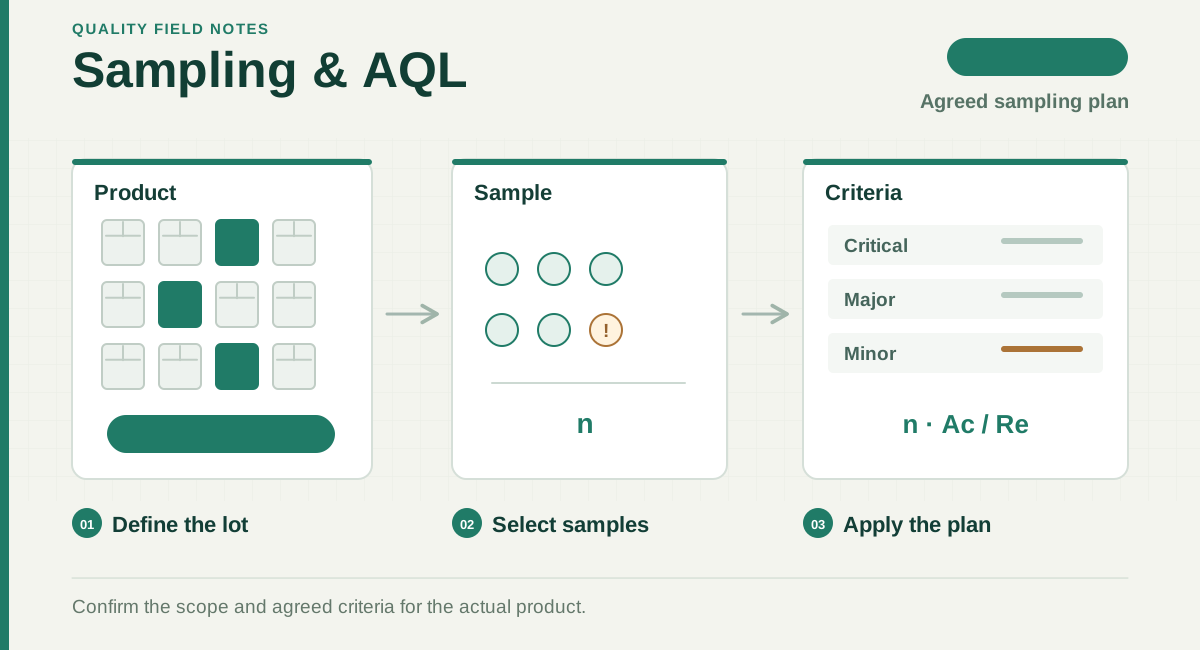
Read the diagram
- Define the lot
Confirm the lot, inspection level and defect classes.
- Select samples
Select physical units according to the agreed sampling plan.
- Apply the plan
Compare observed counts with the plan; assess other requirements separately.
AQL (Acceptance Quality Limit) indexes acceptance sampling plans. Sampling supports a lot-acceptance decision; it does not establish the actual nonconforming percentage of the whole lot.
Confirm three separate settings
- AQL is not a maximum permitted nonconforming percentage for this shipment. Do not multiply it by lot size to invent an allowed defect count.
- General inspection levels I, II and III combine with lot size to determine the code letter. Level II does not mean normal inspection severity.
- Normal, tightened and reduced are inspection severities. Confirm severity separately from level and apply the switching rules of the agreed edition.
Confirm the conditions, then consult the tables
- Agree the standard edition, lot and quantity, inspection level, and AQL, criteria and counting basis for each nonconformity class.
- Find the code letter from lot size and level, then the plan for severity, sampling type and AQL. Follow arrows and notes to confirm the actual sample size and Ac/Re.
- Select samples randomly, record each class and apply the plan and special requirements. Keep inspected counts, findings, scope and limitations.
Zero acceptance does not establish a defect-free lot
“AQL 0” is not a supported AQL in this tool’s standard tables. Ac=0 requires no counted nonconformities in the sample to meet that acceptance number; it does not mean full inspection or a defect-free lot. Agree zero-acceptance plans and full-inspection requirements separately.
The calculator covers normal single sampling only, not tightened, reduced or multiple plans. Check the edition and conditions agreed for your project.
Official references
Articles support understanding of quality risk, standards and service routes. Formal requirements depend on the product, target market and technical project confirmation.